Is an AI coworker worth it for your agency? This guide gives you what the research says, a 10-minute ROI method, a worked example and the cases where the answer is no.
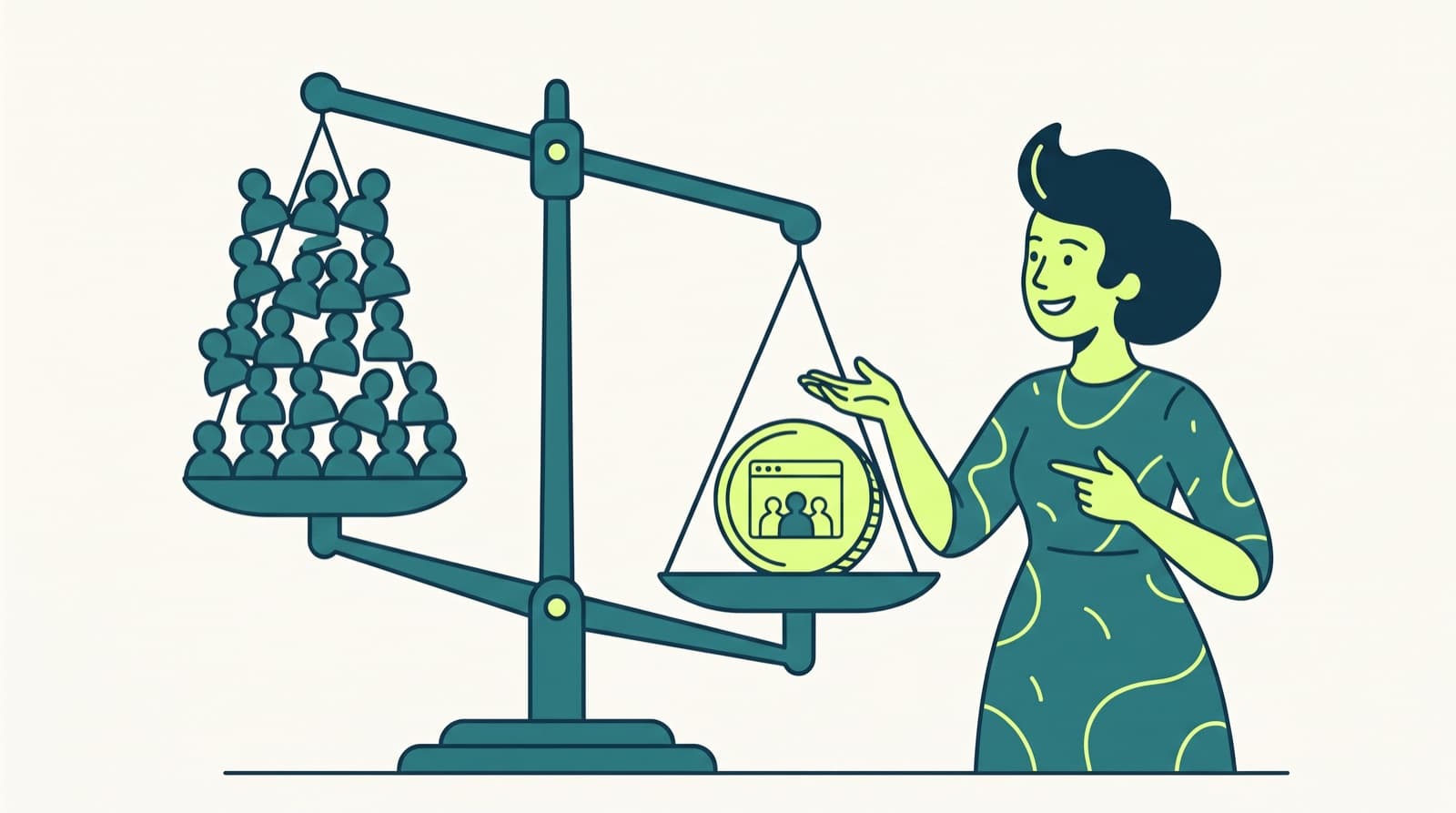
For most small agencies, yes, as soon as one recurring job runs without a person doing it. The price is rarely the problem: at $45 a month per workspace on Patricia's Founding plan, it pays for itself after about 1 saved hour a month.
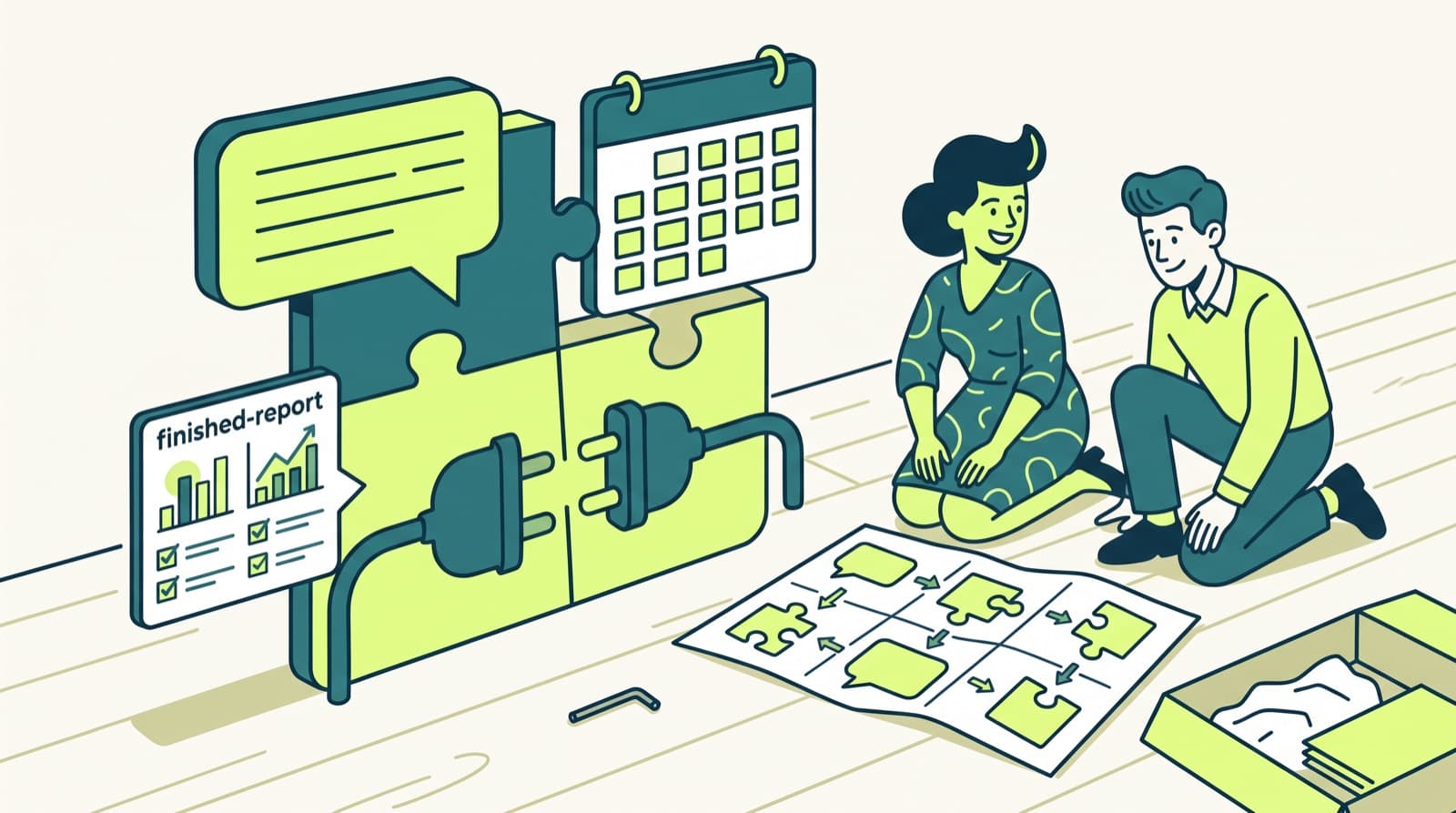
The real question is whether a job gets handed over at all. Below is a method you can run on your own numbers in 10 minutes, a worked example with every assumption labeled, and what the research says about where the hours come from.
Checked in October 2026What does the research say about AI and productivity?
When we asked AI assistants this question in October 2026, they cited big surveys and no agency numbers. Here are the studies that hold up, with what they actually measured.
- Support agents, +14% on average. An NBER study of 5,179 customer support agents found an AI assistant raised issues resolved per hour by 14% on average, by 34% for novice and low-skilled workers, and had minimal impact on the most experienced (Brynjolfsson, Li and Raymond, 2023).
- Consultants, nearly 40% better, until they weren't. In a study of 700+ Boston Consulting Group consultants, performance rose nearly 40% on tasks inside what GPT-4 does well. On a task outside it, performance fell 19 percentage points on average (MIT Sloan, 2023).
- Spending is up, results are thin. McKinsey's "Superagency in the workplace" report found 92% of companies plan to increase AI investment over the next 3 years, while only 1% of leaders call their company mature in AI (McKinsey, January 2025). A later McKinsey report puts it more bluntly: nearly eight in ten companies use gen AI, and just as many report no significant bottom-line impact (McKinsey, 2025).
Read together, the studies say three things an agency owner can use. Gains are real on repeatable work with a known format. They're biggest for junior staff. They disappear when AI is spread thin across everyone with no named job, and they go negative on judgment calls nobody checks.
So measure per job.
How do you calculate AI coworker ROI?
List your recurring jobs. For each one, write down four numbers.
The formula
hours saved per month = hours per run x runs per month x (1 - review share)
monthly value = hours saved x loaded hourly cost
monthly ROI = monthly value - (price + usage above included credits)
- Hours per run: time it takes a person today. Time it once with a stopwatch, don't guess.
- Runs per month: clients x frequency. A weekly report for 8 clients is 32 runs, a monthly one is 8.
- Review share: the part of the time that stays with a person, because someone still reads the draft. Start with 25%. Lower it once the job has run clean for a month.
- Loaded hourly cost: salary plus payroll taxes, benefits and overhead, divided by the hours that person works. If the hours would be billed to a client instead, use your billable rate.
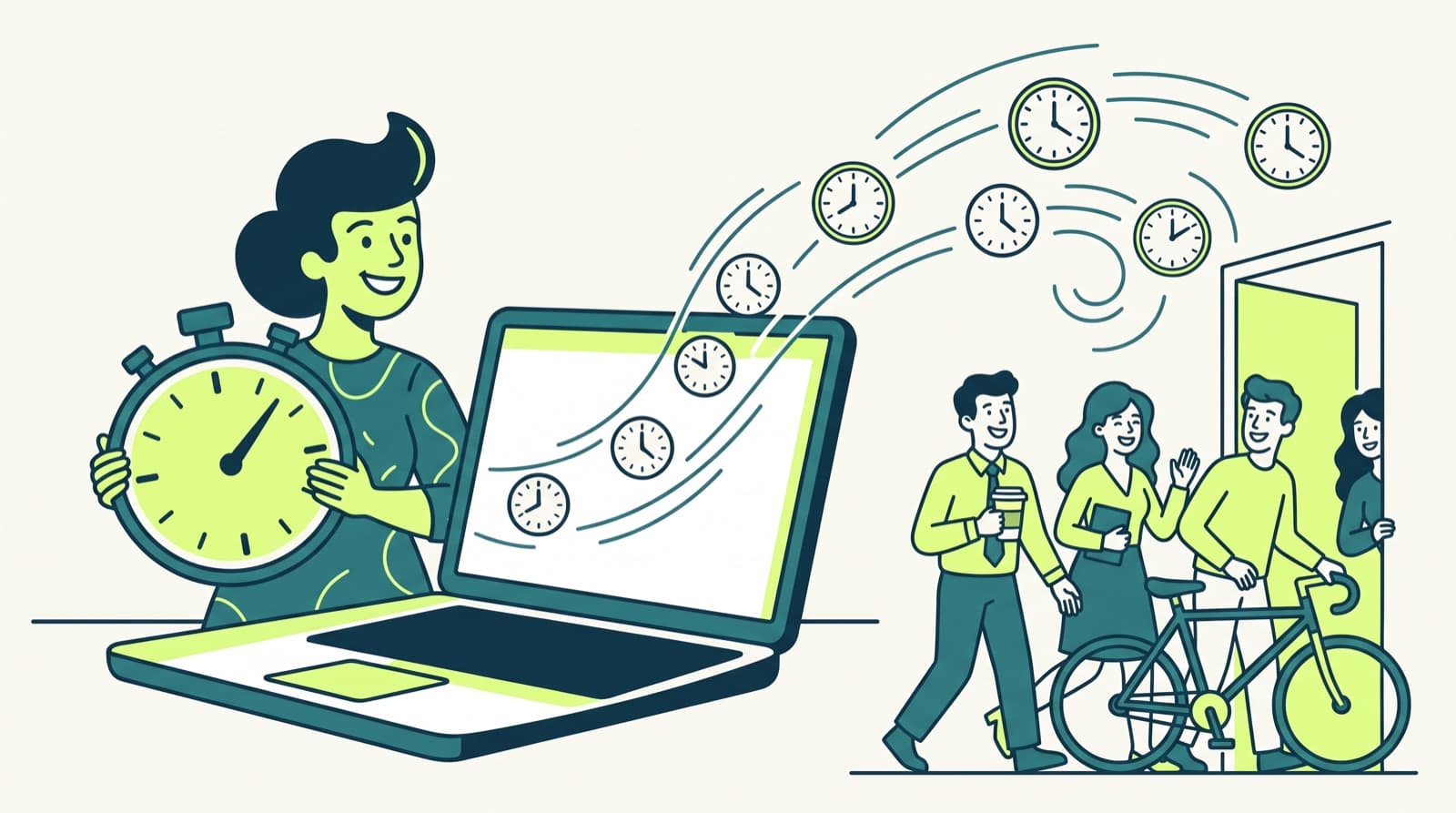
One honest caveat: saved hours only turn into money when you use them. You bill them, take on another client, or skip a hire. If they vanish into more Slack, the ROI is zero whatever the spreadsheet says.
A worked example: a small agency with 8 clients
Assumptions (ours, replace with yours)
- 8 retainer clients, 21 working days a month.
- Loaded hourly cost: $50.
- Review share: 25% of today's time stays with a person.
- Credits per run are mapped to the job classes on our pricing page, which lists typical averages. Heavier runs can bill more.
| Recurring job | Today | Hours / month | Saved after review | Credits / month |
|---|---|---|---|---|
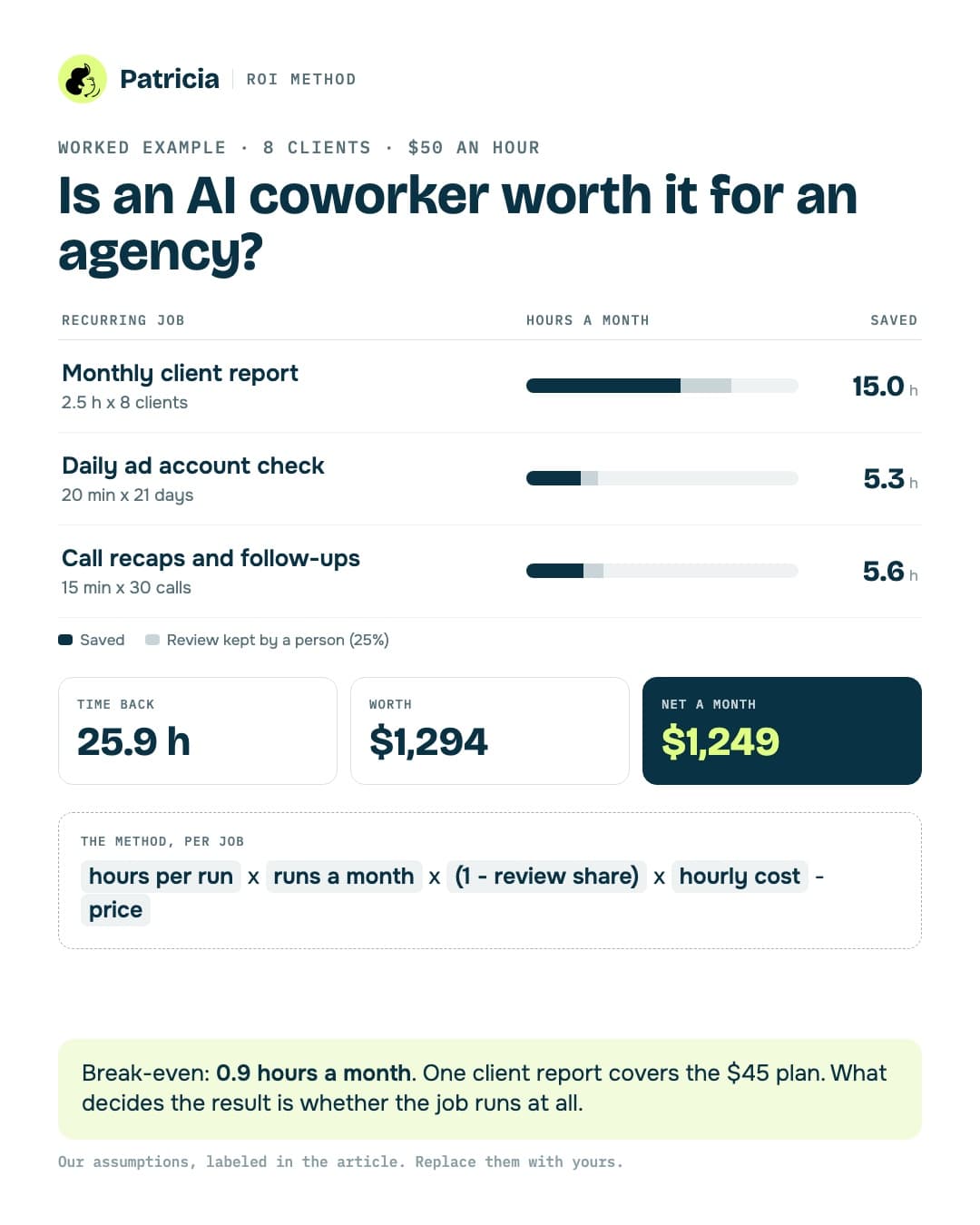
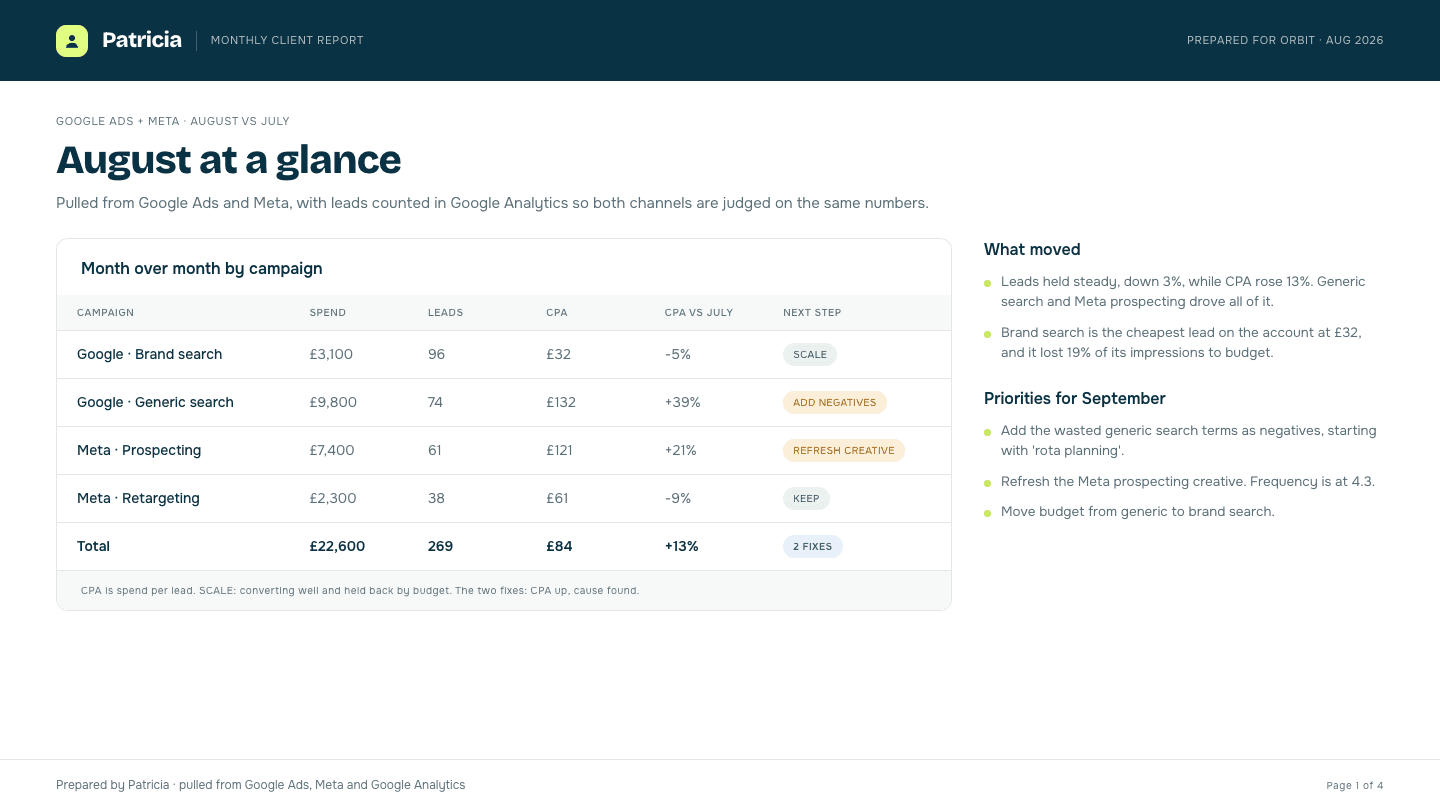
| Monthly client report | 2.5 h x 8 clients | 20.0 | 15.0 | 2,400 (8 x ~300) |
| Daily ad account check | 20 min x 21 days | 7.0 | 5.3 | 6,300 (21 x ~300) |
| Call recaps and follow-ups | 15 min x 30 calls | 7.5 | 5.6 | 4,500 (30 x ~150) |
| Total | 34.5 | 25.9 | 13,200 |
25.9 hours x $50 = $1,294 a month in time back.
13,200 credits fit inside the 20,000 credits included every month on Patricia's Founding plan ($45 a month per workspace, every seat included), so this example needs no extra credits. Pricing is usage-based: a heavier month bills more credits. Credits never expire and roll over.
Net: $1,294 - $45 = $1,249 a month. Take off a one-time setup cost of about 4 owner hours ($200, our assumption) and month 1 still comes out at $1,049.
What if the assumptions are wrong?
- Review keeps half the time: 17.3 hours saved, $863 a month. Still worth it.
- Only the client report ever gets handed over: 15 hours saved, $750 a month.
- Break-even: $45 / $50 = 0.9 hours. One client report a month covers it.
- With the done-for-you Setup Sprint ($9,750 one time, including $1,000 in credits): $9,750 / $1,249 = about 8 months to pay back on these numbers.
Notice what moves the result. The subscription barely matters. The hours per run and whether the job runs at all decide everything.
Is an AI coworker worth it for a small agency? When the answer is no
It's not worth it yet in three cases.
- You have no recurring job. If every week is different project work, there's nothing to hand over on a schedule.
- Nobody owns the setup. The McKinsey numbers above describe this: lots of use, no named job, no result. One person needs 3 to 4 hours in week one.
- The job is mostly judgment. Positioning, pricing a client, a hard conversation. That's the "outside the frontier" work where the BCG consultants got worse with AI. Keep a person on it and let the AI do the prep.
 8:25
What do agencies using one report?
We'd rather show no number than one we can't back up. We do not publish an hours-saved figure from a customer yet, so this page quotes none. Our customer stories are on the customers page.
The method above gets you your own figure: time one job before you hand it over, then time the review after a month.
Run your own numbers before you buy anything. Pick the job that eats the most hours, time it once, and multiply. If you want to see it run on your tools, bring that job to your dedicated onboarding: we set Patricia up with you, on your own client work. Our guide to setting up an AI coworker covers the first week.
FAQ
Is an AI coworker worth it for a small agency?
Usually yes, if it takes over at least one recurring job that runs without you. At $45 a month and a loaded cost of $50 an hour, an AI coworker pays for itself once it saves about 1 hour a month. The price is the small part. The risk is a job that never gets handed over.
How do I calculate AI coworker ROI?
For each recurring job: hours per run x runs per month x loaded hourly cost, minus the review time that stays with a person. Add the jobs up and compare the total with the monthly price plus any usage above the included credits.
What does research say about AI productivity at work?
An NBER study of 5,179 customer support agents found a 14% average gain in issues resolved per hour, and 34% for novice and low-skilled workers. A study of 700+ BCG consultants found nearly 40% better performance on tasks inside AI's capabilities and 19 points worse on tasks outside them.
Why do so many companies see no return from AI?
McKinsey reports that nearly eight in ten companies use gen AI but just as many report no significant bottom-line impact, and only 1% of leaders call their company mature in AI. Spread-out use with no named job and no baseline is the usual cause.
Which agency jobs give the fastest return?
Recurring jobs with a fixed format and a person who checks them today: client reports, daily ad account checks, budget pacing alerts, call recaps and follow-up drafts. Avoid starting with strategy work, where the research shows AI is least reliable.
How long until an AI coworker pays back?
On a $45 monthly plan, the first month if one job runs. On the worked example on this page, a $9,750 done-for-you setup pays back in about 8 months. Use your own hours and rates to check.
Sources
- Brynjolfsson, Li, Raymond, "Generative AI at Work", NBER Working Paper 31161, April 2023, revised November 2023. nber.org/papers/w31161
- MIT Sloan, "How generative AI can boost highly skilled workers' productivity", 19 October 2023, on the BCG study by Dell'Acqua et al. mitsloan.mit.edu
- McKinsey, "Superagency in the workplace", 28 January 2025. Survey of 3,613 employees and 238 C-level executives, October and November 2024. mckinsey.com
- McKinsey, "Seizing the agentic AI advantage", 2025. mckinsey.com
- Patricia pricing, checked 27 October 2026. patricia.app/pricing

Thibaut Hennau is the Growth Manager at Patricia. He runs Patricia's SEO, AI visibility and YouTube.